The Keepsake Album Before the Photo Book
Explore how keepsake albums combine photographs, captions and mementos, and learn to preserve their arrangement and the clues it holds for later readers.
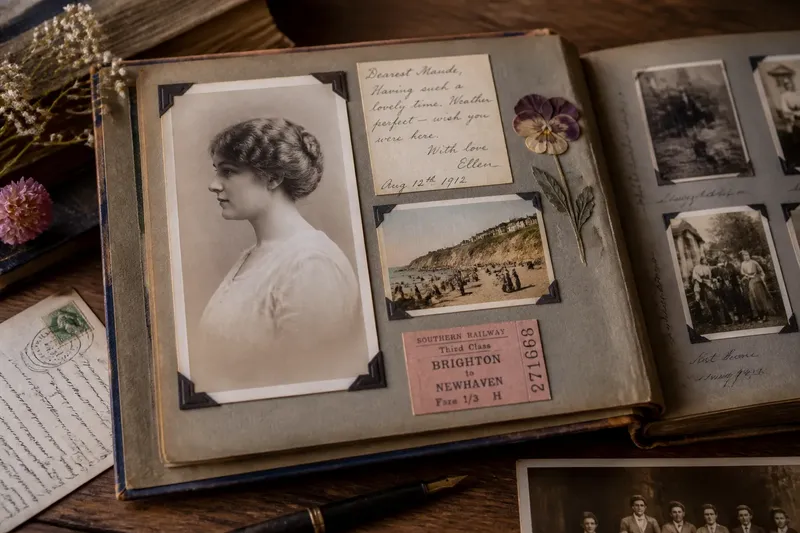
A keepsake album can place a portrait beside a handwritten name, a ticket or a pressed flower, making the page tell more than the photograph alone. The phrase “keepsake album before the photo book” describes a useful contrast in format, not a universal historical sequence: albums and printed photo books have varied across periods, places and makers.
Mixed collections
Many personal albums bring together photographs and other paper items. A portrait might sit beside a calling card, a short note, a postcard or a small drawing. The combination records an image and the maker’s choice to keep it alongside particular words or objects.
Some albums were assembled over time, with handwriting, paper and image mounts changing from page to page. Others may be more uniform. A blank space could reflect an unfinished arrangement, a missing item or a deliberate pause; its meaning depends on the surrounding evidence.
A modern photo book is often designed as a selected sequence of images, sometimes with captions. That does not make it less personal, nor does every older album contain mixed materials. The distinction is best treated as a way to compare particular objects: inspect their materials and layout before drawing conclusions about how or when they were made.
Reading crowded pages
When several items compete for attention, start with the clearest visual anchor, often a larger portrait or a bold handwritten note. Then look at nearby objects and ask what relation the arrangement might suggest. Proximity can be a clue, but it does not prove that items belong to the same event.
If you are making a new album, place the main photograph first and leave room for a small number of supporting items. A clear margin can help readers distinguish a caption from a separate keepsake without making the page look overly uniform.
Say you have a portrait, a postcard and a paper ticket from a family seaside visit, and the page feels busy. Place the portrait in the clearest position, set the postcard beside it with its message visible, and keep the ticket below as a small detail. The resulting arrangement should make the items easier to read together while leaving their different forms apparent.
Order and uncertainty
An album may look chronological without following a strict timeline. Its maker might have grouped images by family, place, friendship or availability instead. Avoid assuming that neighbouring photographs show the same day or year.
Look for several kinds of clues: a handwritten date, a studio mount, a postmark or recurring names. Each may help, but none necessarily settles the sequence on its own. Separate observation from interpretation with wording such as “likely the same visit” rather than adding a definite date without supporting evidence.
If you are adding information to an inherited album, leave original pages in place when their sequence may matter. Record a proposed order in a separate index or note, and identify it as a later interpretation. This keeps your useful suggestion distinct from the maker’s arrangement.
Loose and fragile items
A loose ticket or dried plant can help explain a page, but it may also stain or tear nearby material. If an item has slipped from its position, its original connection may be uncertain.
Record where you found it on a separate sheet, using pencil on that sheet rather than writing on the album. Keep it in a suitable protective sleeve or folder, and avoid household tape or glue. If an item is mouldy, shedding or especially fragile, seek advice from a conservator or local archive service before handling it further.
For a new album, photo corners or archival-quality sleeves may suit some materials; the right choice depends on the item. A separate caption or copy can preserve information about a delicate ticket without attaching the original. Keep the link between object and page clear in your notes.
Captions and later readers
A caption that made sense to the album’s first audience may confuse someone later. “Auntie” or an unexplained initial may no longer identify a person clearly, while a private joke may have lost its context.
Keep original wording distinct from new identifications. A removable note or index can record who supplied an identification and how certain they are. Do not write over a photograph or replace an ambiguous caption with a guess. If relatives remember an event differently, note the disagreement rather than presenting one account as settled.
Brief captions also reveal what the maker chose to emphasise. “At home” might matter more to them than an address, while a name may mark a friendship rather than identify the most prominent person in the picture.
Album format questions?
Why are some pages arranged in rows?
Rows can make portraits easier to compare and may suit a family or social record. They do not, by themselves, show how much the maker valued any individual story.
Why mix photographs with writing?
Writing can identify a person, preserve a message or add a response that the image cannot show. Its placement beside a photograph also records that the maker wanted readers to consider them together.
What might an empty space mean?
It could have been reserved for another photograph, left as part of the design or created when a plan changed. Treat it as a clue, and compare it with other pages before proposing an explanation.
Can a digital copy preserve an album’s character?
A digital copy can record page order and make details easier to share, but it may not show texture, thickness or how an item is attached. Save images of whole pages as well as close details, and record the original sequence alongside the files.
Preserving the arrangement
Every album reflects selection: which faces appear, what receives a caption and which keepsake sits beside a photograph. Those choices make it a personal collection rather than a neutral record.
When preserving a keepsake album, retain its original order where possible, distinguish later interpretations from earlier notes, and keep different materials recognisable. If you make a digital copy, include a record of page sequence and note any uncertain identifications; that gives later readers context without presenting an interpretation as the maker’s own arrangement.